Alabama may not be the first place that comes to mind when people think of serious mountain biking. States such as Colorado, Utah, North Carolina, and California have long commanded attention for their dramatic terrain and established racing communities. However, Patrick Putman of Harvest, Alabama points to a mountain biking scene that is steadily earning recognition of its own. With extensive trail systems, demanding terrain, organized racing, and a growing community of riders and volunteers, Alabama is proving that it deserves a place on the mountain biking map.
The state’s geography is part of the reason. Northern Alabama reaches into the southern Appalachian region, while central Alabama contains ridges, rocky hills, forests, and elevation changes that create surprisingly demanding riding. Trails range from smooth, flowing routes suitable for newer riders to technical descents and rock features that challenge experienced racers. Those elevation changes are also part of what makes mountain bike courses across the country so compelling, with some destinations standing out for the dramatic climbs and descents built into their race routes.
Oak Mountain State Park, Coldwater Mountain, and Monte Sano State Park stand out not only because of their trails but because of the events, organizations, and continued investment surrounding them. The result is a riding culture that is becoming increasingly difficult to overlook.
Oak Mountain Has Become Alabama’s Mountain Bike Showcase
If one trail system best represents Alabama’s emergence as a mountain biking destination, it is Oak Mountain State Park near Pelham. The park contains approximately 50 miles of trails, including singletrack and doubletrack routes with roughly 1,600 feet of combined climbing on the main loop.
A rider can spend a day navigating relatively approachable terrain before moving onto sections that demand considerably more technical ability. Experienced riders can seek out features such as Blood Rock and portions of the BUMP Trail, while beginners have easier options on the Lake Trail.
That range also makes the park particularly attractive for organized events.
In 2026, the Bump N’ Grind race celebrated its 32nd year with a three-day weekend featuring enduro, short-track, cross-country, and pump-track competition. The event was also significant for another reason: organizers incorporated a multi-stage enduro race alongside traditional short-track and cross-country competition.
Oak Mountain is also seeing continued development outside the traditional race calendar. A new gravity-oriented trail project known as Jackhammer opened this year as part of the Innovate Alabama Trail Project, adding another dimension to an already substantial trail network.
The park’s combination of established trails, race history, accessibility from Birmingham, and continued development makes it one of the most important mountain biking hubs in the Southeast.
Coldwater Mountain Offers a Different Kind of Riding
Approximately 90 miles east of Birmingham, Coldwater Mountain near Anniston offers a very different experience. Located within the Forever Wild Coldwater Mountain Doug Ghee Nature Preserve and Recreational Area, the trail system was specifically developed as a major mountain biking destination. The project represents a notable collaboration between conservation programs, public agencies, trail organizations, and mountain biking advocates.
That planning helped Coldwater develop a reputation well beyond Alabama. The system has been recognized by the International Mountain Bicycling Association as a Ride Center, a designation associated with large-scale mountain bike facilities offering a broad range of riding experiences.
In fact, a study examining the economic impact of the Coldwater Mountain trail system looked specifically at potential visitor spending and the broader economic effects of mountain bike tourism in the Anniston-Oxford area. The analysis considered scenarios involving tens of thousands of annual visitors and examined spending associated with both day trips and overnight stays.
Visitors need places to stay, restaurants, gas stations, bike services, outdoor retailers, and other businesses. A trail destination can therefore become part of a community’s tourism economy rather than simply another recreational amenity.
Coldwater Is Also Becoming a Racing Destination
The Coldwater Trail Race returns October 31 and November 1, 2026, with dedicated races covering 40-mile and 17-mile distances. Coldwater is a major Southeast trail destination with approximately 60 miles of purpose-built singletrack ranging from beginner-friendly flow to technical, rock-heavy descents.
Races give riders a reason to travel, provide goals for local cyclists, attract spectators and volunteers, and create opportunities for trail organizations to build relationships with businesses and communities. The Northeast Alabama Bicycle Association’s 2026 calendar also includes the Coldwater Fat Tire Festival in October and the Coldwater Trail Race later that month, reinforcing the area’s growing role as a destination for cycling events.
Monte Sano Brings Mountain Biking Into the Huntsville Area
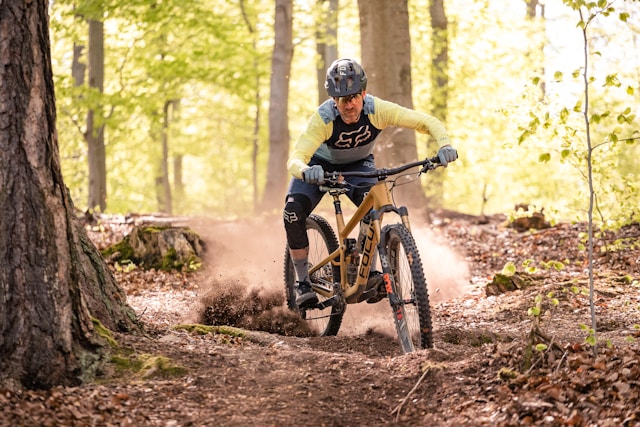
Further north, Monte Sano State Park overlooks Huntsville and provides access to a network of wooded trails characterized by elevation changes, rocks, roots, and technical features.
The Huntsville Area Mountainbike Riders, or HAMR, plays an important role in maintaining and improving trails throughout North Alabama. The organization emphasizes volunteer trail work and community events, illustrating how much of the mountain biking infrastructure depends on people willing to spend time maintaining the trails they ride.
HAMR’s 2026 Fall Fest at Monte Sano State Park is scheduled for October 9–10 and includes shuttles, group rides, races, games, vendors, and other activities. The organization says its volunteers contribute more than 2,000 hours of trail maintenance annually.
Alabama’s Racing Scene Is Becoming More Diverse
Cross-country racing rewards endurance, pacing, climbing ability, and technical efficiency. Enduro places greater emphasis on timed descents while requiring riders to manage the un-timed portions between stages. Downhill racing concentrates almost entirely on descending speed and technical control.
Pump-track racing is different, focusing on rhythm, acceleration, cornering, and efficient movement around a compact course. Having multiple disciplines represented within one state creates more opportunities for riders to find the type of competition that suits them.
New Trail Development Is Expanding the Possibilities
Perhaps the most interesting story surrounding Alabama mountain biking is that development has not stopped.
Oak Mountain’s continued trail construction demonstrates how established destinations can evolve instead of simply relying on their original trail networks. The opening of new gravity-oriented terrain is particularly important because it broadens the types of riding available at a destination already known for cross-country riding.
The state’s trail organizations are also increasingly emphasizing inclusivity.
The Limitless MTB Festival, scheduled for September 18–20, 2026, at Oak Mountain State Park, was created specifically as a major women’s mountain biking festival. Its schedule includes guided rides, clinics, social events, and educational programming. Events like this contribute to a healthier cycling community because they provide opportunities for riders who might not necessarily enter traditional races.
Mountain biking popularity grows when people have multiple ways to participate.
Some want to compete. Others want to learn. Some want to ride with friends. Others are interested in trail stewardship or simply spending more time outdoors. A strong trail destination can accommodate all of them.
Trail Building and Conservation Go Together
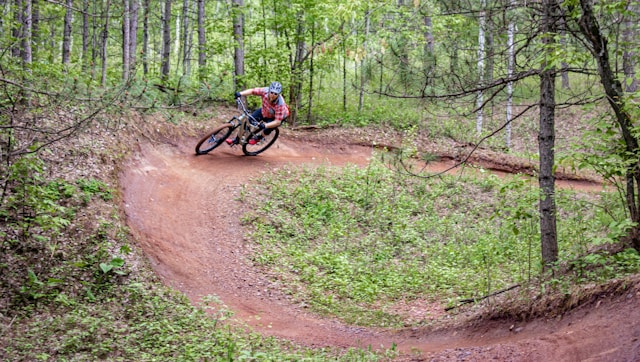
There is another important aspect to Alabama’s mountain biking growth: many of the state’s best riding areas exist because land conservation and recreation have been brought together.
Coldwater Mountain is perhaps the clearest example.
The trail system exists within a protected Forever Wild property, revealing that recreation and conservation do not necessarily have to be opposing goals. Thoughtfully designed trails can provide public access while keeping development concentrated along defined routes.
That relationship also places responsibility on riders. Poor trail behavior can contribute to erosion and environmental damage, while responsible trail use and volunteer maintenance can help preserve those same places.
Alabama Is Becoming Harder to Ignore
The growth of mountain biking in Alabama isn’t based on one spectacular trail or one nationally famous race, it is happening through a collection of places and people. Alabama does not need to replicate Colorado, Utah, or California to become an important mountain biking state. Its appeal comes from the Appalachian foothills, technical terrain, strong local organizations, and communities willing to invest time in building and