Mountain bike racers have to manage traction, body position, braking, steering, terrain changes and energy expenditure while continuing to move efficiently through constantly changing conditions. Cadence, or the rate at which a rider pedals, (measured in RPMs), affects how smoothly a rider can apply power, respond to terrain and transition between technical sections of a course.
Technical mountain bike racing introduces another layer. A rider may move from a steep climb to a rocky section, through a tight corner and immediately into a short acceleration. Each situation can require a different pedaling rhythm, gear choice and level of effort.
Patrick Putman of Harvest, Alabama says that the most effective racers learn to make cadence changes naturally without disrupting traction or body position. That ability becomes particularly important when the trail turns upward and the rider has to balance pedaling force with the need to keep the rear wheel connected to the ground. On technical climbs, even small changes in cadence can alter how smoothly that power reaches the trail, making it an important part of maintaining traction while navigating abrupt changes in grade.
Cadence and Traction on Technical Climbs
Technical climbs can create a difficult balance between power and traction. A rider who selects too hard a gear may have to push forcefully on each pedal stroke. On loose or uneven terrain, that sudden application of force can cause the rear tire to spin.
Selecting an easier gear can allow the rider to maintain forward momentum with a smoother effort. Instead of forcing the bike upward through a series of heavy pedal strokes, the rider can maintain more consistent pressure while allowing the rear tire to remain engaged with the surface.
This becomes especially important on steep sections covered with loose dirt, roots or embedded rocks. Losing traction for even a moment can cost valuable momentum. Recovering that speed may require significantly more energy than maintaining it in the first place. But cadence is not the only factor involved. Tire pressure, body position, suspension setup and overall power output also affect traction. However, the relationship between gearing and pedal rhythm gives racers another way to control how power reaches the rear wheel.
Choosing the Right Gear Before the Climb
Racers have limited opportunities to make large adjustments once they are climbing a steep, technical pitch. Waiting until the legs are already under heavy load can make shifting less efficient and may force the rider to lose momentum.
Experienced racers often anticipate the terrain and select an appropriate gear before the steepest portion begins. That allows them to enter the climb with a usable rhythm rather than struggling to recover after the gradient changes.
This is particularly important on courses with short, repeated climbs. A rider might encounter several steep pitches separated by only a few seconds of flatter terrain. Constantly attacking each climb with maximum force can quickly drain the legs.
Being strategic when selecting gears allows the rider to decide which sections deserve a hard effort and which are better handled with controlled, sustainable power.
When a Lower Cadence Makes Sense
There are situations in racing where a rider may deliberately use a harder gear and slower cadence. A short, steep rise with good traction may reward a powerful effort, particularly when maintaining speed is more important than conserving energy.
Low-cadence efforts can also be useful when a rider needs to accelerate aggressively out of a corner or respond to another racer. The mechanical tradeoff becomes clear in cycling research: one study measuring maximal concentric cycling found that peak torque decreased from 239 N·m at 20 rpm to 117 N·m at 120 rpm, showing how slower pedaling can require substantially more torque from the rider with each stroke.
The tradeoff is muscular demand. Pushing a harder gear places more force through each pedal stroke, which can become costly when repeated throughout a long race. That does not make low cadence inherently inefficient; it means the rider is choosing a different balance between force per stroke and the number of strokes required to produce power.
The key is knowing when the additional force is useful and when it simply creates unnecessary fatigue.
The Importance of Short Acceleration Zones
Technical courses often contain brief sections where riders have an opportunity to accelerate. A racer may encounter a short stretch of smooth ground and have only a few seconds to build speed before another obstacle appears. There may not be enough distance for a long, gradual acceleration.
This is where appropriate gearing becomes particularly valuable.
If the gear is too difficult, the rider may struggle to accelerate quickly. If it is too easy, the rider may spin rapidly without getting the desired increase in speed. Anticipating these sections allows a racer to prepare before reaching them.
The ability to accelerate immediately after a technical feature can also help riders create gaps. A technically strong rider who exits a difficult section with momentum may gain more from a short acceleration than a competitor who has to spend several seconds getting the bike back up to speed.
Cadence and Corner Exits
Cornering creates another important cadence challenge. Riders often need to reduce or stop pedaling while setting up for a technical turn. Body position, braking and line selection take priority during the corner itself. Once the bike is pointed toward the exit, however, acceleration becomes important.
The transition needs to happen quickly.
A rider who waits too long to resume pedaling can lose valuable momentum. Starting too early can interfere with balance or cause a pedal strike in a tight or uneven turn.
This makes pedal timing an important racing skill. The strongest riders learn to coordinate their braking, body position and pedal strokes so that acceleration begins at the right moment. Over an entire race, these small exits can add up to a meaningful difference in speed.
Managing Fatigue Over a Full Race
Repeatedly grinding hard gears may produce significant muscular fatigue – that fatigue can become particularly costly late in the race, when riders still need to make precise decisions while steering, braking and maintaining balance. A more controlled approach to gearing can help prevent unnecessary muscular strain during sections that do not require maximum effort.
This does not mean riding conservatively throughout the race. Competitive riders still need to attack when opportunities arise. The difference is that strong racers learn to distinguish between efforts that can produce a tactical advantage and efforts that simply consume energy.
Cadence During a Race Battle
Suppose two riders enter a technical climb together. One rider attacks immediately with a heavy gear while the other maintains a smoother rhythm. The initial surge may create a gap, but the rider who attacks has also increased the cost of the effort.
The situation can change again on the next section. A rider who manages energy carefully may be able to respond later, particularly if the course includes another acceleration or climb. This is one reason race strategy cannot be separated completely from pedaling technique.
Racers must constantly decide where to spend energy and where to maintain enough reserve for what comes next.
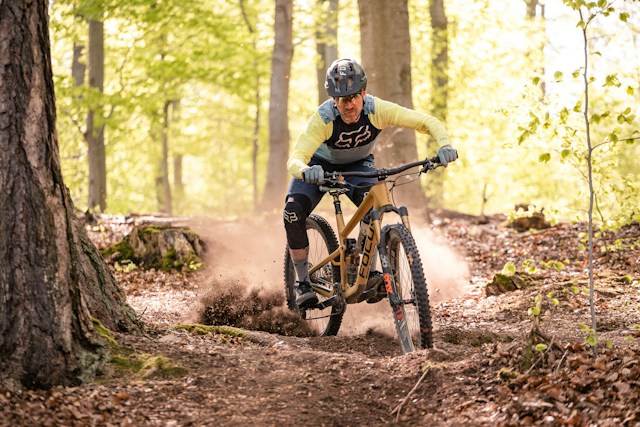
Technical Descents
Some technical sections require almost no pedaling. Instead, riders focus on braking, steering, body position and choosing a clean line. The gear selected before entering a descent can affect how quickly the rider can accelerate afterward. A racer who knows a descent ends with a short uphill or sprint section can prepare accordingly.
The transition from coasting to pedaling needs to be immediate. A poorly chosen gear can make those first pedal strokes awkward and delay acceleration.
Good racers therefore think beyond the obstacle directly in front of them. They consider what comes immediately afterward and prepare the bike accordingly.
Developing Cadence Awareness Through Training
Racers can improve their ability to manage cadence by practicing specific situations rather than simply trying to maintain a particular number. One useful exercise is repeating the same technical climb using different gears. The rider should pay attention to traction, muscular fatigue and how easily the bike responds to changes in the terrain.
Another approach is practicing corner exits. Riders can choose a safe section with a predictable turn, concentrate on their braking point and then work on beginning acceleration as soon as the bike is properly positioned.
Short acceleration drills can also help. After coasting through a technical section, the rider can practice selecting the right gear and quickly building speed. These exercises teach the rider to connect gearing and pedal rhythm with actual race situations.
Turning Pedaling Into a Racing Skill
Cadence is closely connected to several of the skills that define competitive mountain biking. It affects how riders apply power on climbs, maintain traction, accelerate out of corners and manage their energy across a race.
Its importance becomes most apparent during transitions. A rider who can move smoothly from climbing to coasting, from cornering to acceleration and from controlled effort to attack can preserve momentum while using energy deliberately.
Technical mountain bike racing rewards riders who can adapt quickly. There is rarely one perfect gear or one ideal pedal rhythm for an entire course. The strongest approach is to understand how gearing, terrain, traction and fatigue interact and then make adjustments before the course forces them.
For racers looking to improve, cadence is therefore worth treating as more than a training metric. It is part of bike control, race strategy and energy management. Learning when to spin, when to push and when to prepare for the next section can help a rider make better use of both the bike and the power they have available.